Blog 10 Feb

In conversation with Dani and Elisabet Bosch – Florenci Fruits

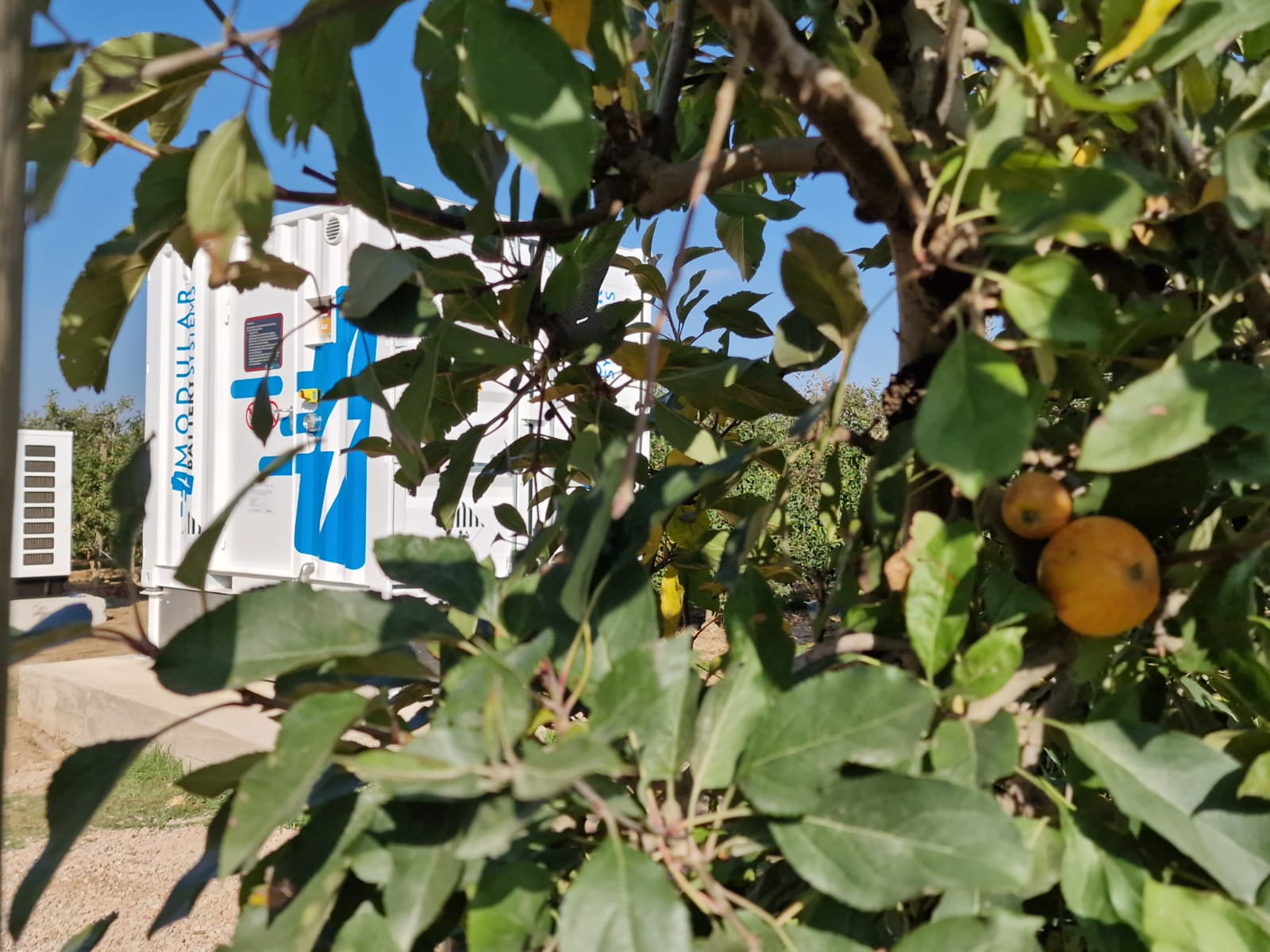
We drive back through the Catalan countryside. The morning sun hangs low above the apple trees. Today, we are visiting Florenci Fruits again — the family business of Dani and Elisabeth Bosch — to reflect on our collaboration and the installation of our first modular battery system in Spain.

How Florenci Fruits Secured Its Energy Supply with a Modular Battery

In their apple orchard, we talked about the challenges they faced with their energy supply, their choice for a modular solution and how they experienced the entire process. We discussed what good collaboration means, how trust grows and how they view the future with this step towards battery storage.

In Sant Pere Pescador, between the sea and the river, the Bosch family runs their business Florenci Fruits. They grow, sort and pack apples — their “queen of the orchard” — and turn them into juice, jam and compote. The location is unique: just one kilometre from the sea and a hundred metres from the river. This creates a cool microclimate resulting in apples with a more intense colour and flavour.

But it was precisely in this idyllic spot that a growing problem arose.

“As soon as a cloud passed in front of the sun, the voltage dropped,” says Dani.

“Compressors stopped, machines shut down — it caused unrest, damage and frustration.”

Their local power grid was overloaded. Everyone in the area is connected to the same transformer, which is owned by the local community. Every time a business in the neighbourhood expanded, another connection was added. The voltage dropped further, causing machines to fail regularly and installations to be restarted over and over again. The switch to solar energy therefore did not bring the freedom they had hoped for, but rather new challenges: large peaks when the sun was shining, deep troughs as soon as a cloud passed in front of the sun.

This problem is familiar to many companies in Spain: plenty of sunshine, but too little stability in the grid. Renewable energy production is growing rapidly, but the infrastructure is not always keeping pace. The result : operational instability, rising costs, unpredictability — and a growing need for reliable energy storage.

"We wanted someone who truly understood what was needed, says Elisabeth. We trusted you completely — con los ojos cerrados. "

They weren't looking for a supplier, but a solution.

To fully understand the issue, we visited Florenci in person beforehand. We took the time to analyse the situation, explain our approach and show what a modular battery could mean for their business.

We then designed a customised battery system  tailored to Florenci Fruits’ specific operational requirements.

The final solution consists of:

  • 10FT modular battery system compliant with PGS37-1 safety standard
  • 468 kWh of battery storage
  • 200 kW of power (inverter)
  • 450 kVA of input power (generator)
  • 375 kWp of inverter power (solar panels)
  • Envitron Energy Management System

Thanks to our comprehensive approach,  we managed the entire project from start to finish.

Continuity, security and control over energy consumption.

We replaced  the existing infrastructure and outdated distributors, switched off the power and carried out high-impact work outside operating hours. We also integrated the building-related installations, such as inverters and cooling machines, into a single smart system.

The system makes smart use of all available devices. This  enables peak shaving peak at the main connection  which has a contracted capacity of 85 kW (and 0 kW feed-in) during the busy harvest season. During this period, when warm apples are brought in and need to be cooled down to 3 °C at lightning speed,  demand loads sometimes exceed 250 kW. Outside the harvest season, the installation is used to optimise self-consumption: as much of the self-generated solar energy as possible is used directly.

If the utility supply fails — which happens more often than you might think in Catalonia — the system automatically switches to off-grid operation. This ensures that all business processes continue uninterrupted. For this purpose, an emergency generator has also been installed and connected to our system, which switches on automatically when necessary.

The generator serves two crucial functions:

  1. Grid synchronisation: in the event of prolonged high usage loads, low solar generation and a nearly depleted battery, the generator switches on automatically. It charges the battery efficiently and compensates for the energy shortfall with minimal fuel consumption.
  1. Off-grid support: when the installation is running off-grid and there is no solar yield at night, the generator provides sufficient power for a long period of time to keep the business running.


Since the installation, the change has been noticeable

“The power supply remains constant, with no more peaks and troughs,” says Dani. “Our machines run more smoothly. There is stability and peace of mind in daily operations once again.”

What Dani and Elisabeth particularly appreciate is the way they work together.

“In Spain,  it is rare to see such punctual and professional execution,” says Dani. “If you say 8 a.m., then you’re there. A 10? No, a 10++! You don’t look for problems, but solutions. That’s exceptional here.”

Once, there was a power failure caused by the local electricity grid. Nevertheless, they called us. “They responded immediately,” says Elisabeth. “ They were even able to resolve the issue remotely.. That gave us confidence.” That trust forms the foundation of every project — not just delivering results, but continuing to think proactively alongside us. Siempre con propósito.

Dani and Elisabeth are looking ahead

“This is the future,” says Dani. “Solar energy with storage. Our long-term ambition is to become independent of the grid. With as much sun as we have here, that should be possible. If you can achieve such results in the Netherlands with less sun, then we should certainly be able to do so here.”

For Florenci Fruits, this step means peace of mind, security and independence.

For us at Modular Battery Systems, it is a milestone: our first battery in Spain.

At the end of the morning, we walked past the battery together. We said goodbye with a handshake, a smile and a crate of apples.  A thoughtful gesture, symbolising a partnership built on expertise and trust.

"Gracias por la confianza, Dani y Elisabeth."
Modular Battery Systems
Blog 29 Nov

Safety First – The Importance of PGS 37 in Battery Storage

At Modular Battery Systems, safety always comes first. Because battery systems are often considered hazardous materials, their storage and management demand strict compliance with guidelines such as PGS 37. This standard ensures that batteries are handled safely, sustainably, and with minimal risk of incidents.

Why is PGS 37 relevant for batteries?

Lithium-ion batteries consist of flammable electrolytes and other reactive materials that can pose safety risks in the event of damage or malfunction. PGS 37 provides risk-management guidance by setting clear requirements for:

  1. Fire and Explosion Safety
  2. Storage Locations and Distances
  3. Ventilation and Climate Control
  4. Incident Management and Emergency Plans

At Modular Battery Systems, we work proactively with our customers to ensure that our battery solutions are not only technically advanced, but also fully compliant with the PGS 37 guidelines.

PGS introduction video

Why is PGS 37 relevant for batteries?

  1. Fire and explosion safety

One of the key points of PGS 37 is minimising fire and explosion risks. For batteries, this means using storage modules that are resistant to heat and external shocks. In addition, separating damaged or risky batteries is essential.

Our modular battery systems are designed with built-in safety measures, such as fire-resistant enclosures and thermal monitoring, to prevent fires and detect risks in a timely manner.

  1. Storage locations and safety distances

PGS 37 sets requirements for where batteries may be stored and what distance must be maintained from other storage locations or buildings. Batteries must be placed in fire-resistant compartments, with a focus on accessibility for maintenance and emergency services.

We offer flexible storage solutions that can be easily integrated into existing infrastructure, while complying with all safety and distance regulations.

  1. Ventilation and Climate Control

Lithium-ion batteries generate heat during use and charging, and poor ventilation can lead to overheating or gas formation. PGS 37 emphasises the importance of controlled temperature and adequate ventilation in storage areas.

Our battery systems incorporate advanced cooling and ventilation systems that effectively dissipate heat and extend battery life.

  1. Incident Management and Emergency Plans

In line with PGS 37, companies must have an emergency plan in place to quickly and efficiently manage incidents such as overheating or leakage. Recording and analysing incidents is also crucial to preventing future risks.

We support customers in drawing up such plans and supply batteries with sensors that detect and report incidents at an early stage.

 

Advantages of working with Modular Battery Systems

Compliance with guidelines such as PGS 37 is not just about risk management; it also offers strategic advantages:

  • Safety: Employees and the environment remain protected.
  • Sustainability: Safe batteries last longer, which reduces waste.
  • Cost savings: Fewer risks lead to lower insurance and maintenance costs.
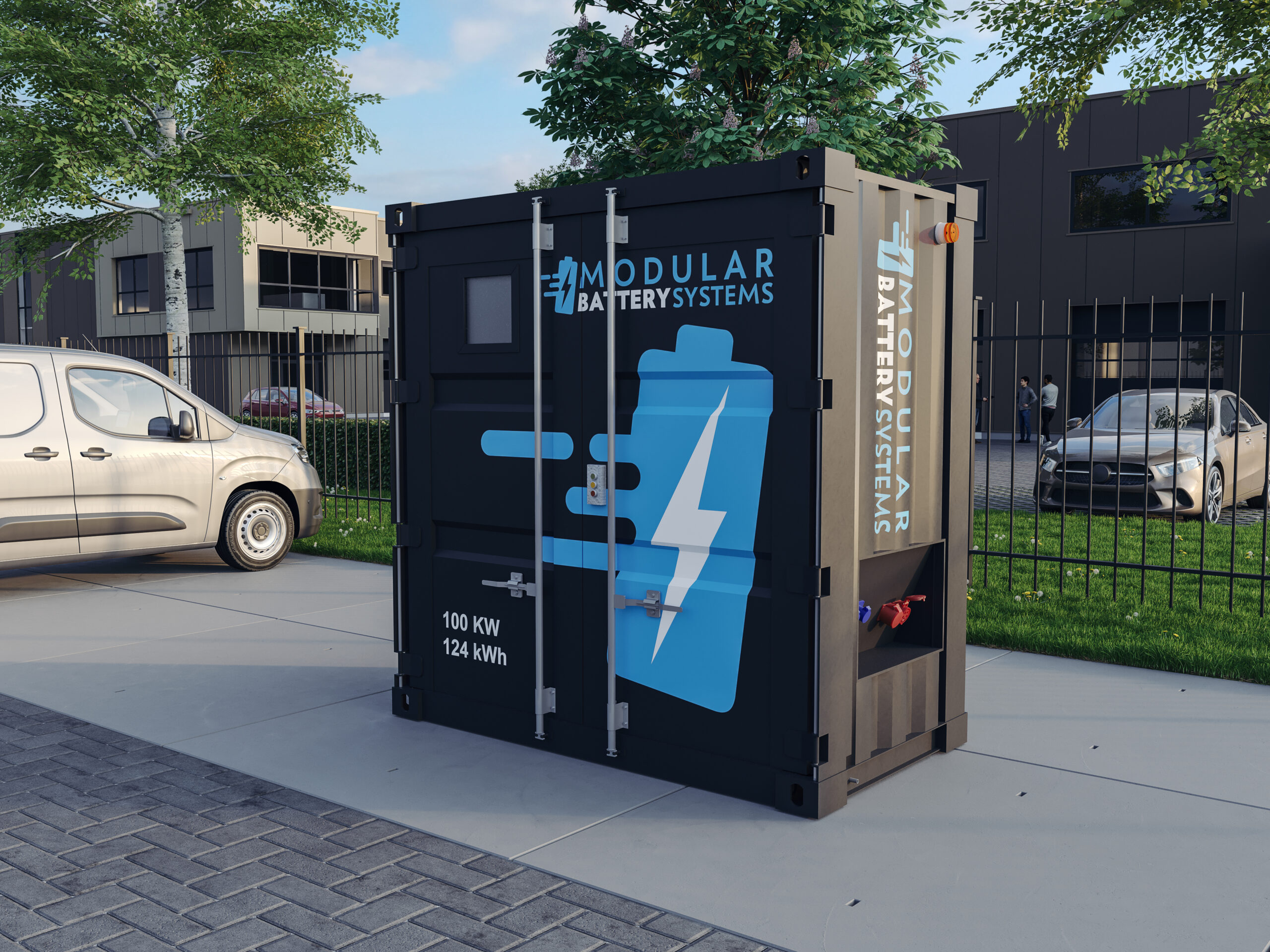
Compacte batterijcontainer 100 kW – 124 kWh van MBS, duurzame oplossing voor tijdelijke en vaste stroomvoorziening.